
🇬🇧 For English version scroll down ⬇️
Il cuore di tutto sono i tassi reali (tassi meno inflazione). L’oro non paga interessi: quando i tassi reali salgono, tenerlo “costa” e il prezzo scende; quando scendono, l’oro sale. Ma il movimento parte dalle aspettative, non dalla decisione già presa: l’oro si muove prima, su ciò che il mercato pensa farà la banca centrale.
I driver in ordine di importanza:
Tassi reali e sentiment Fed — il motore principale. Conta l’aspettativa su tagli o rialzi, più che il tasso attuale.

Dollaro — gemello dei tassi. Dollaro forte = oro più caro per chi compra in altre valute = pressione al ribasso. Spesso si muovono insieme.
Inflazione — entra nel calcolo dei tassi reali. Da sola aiuterebbe l’oro, ma se la Fed risponde alzando i tassi più dell’inflazione, vince l’effetto tassi.
WTI / petrolio — non muove l’oro direttamente: è una spia dell’inflazione. Petrolio su → inflazione su → tassi su → oro giù. Se l’oro crolla ma il petrolio è fermo, la causa è altrove (tassi/dollaro).
Bene rifugio — il jolly. In caso di guerra o panico l’oro può salire anche con tassi alti: la domanda di sicurezza batte la matematica dei rendimenti.
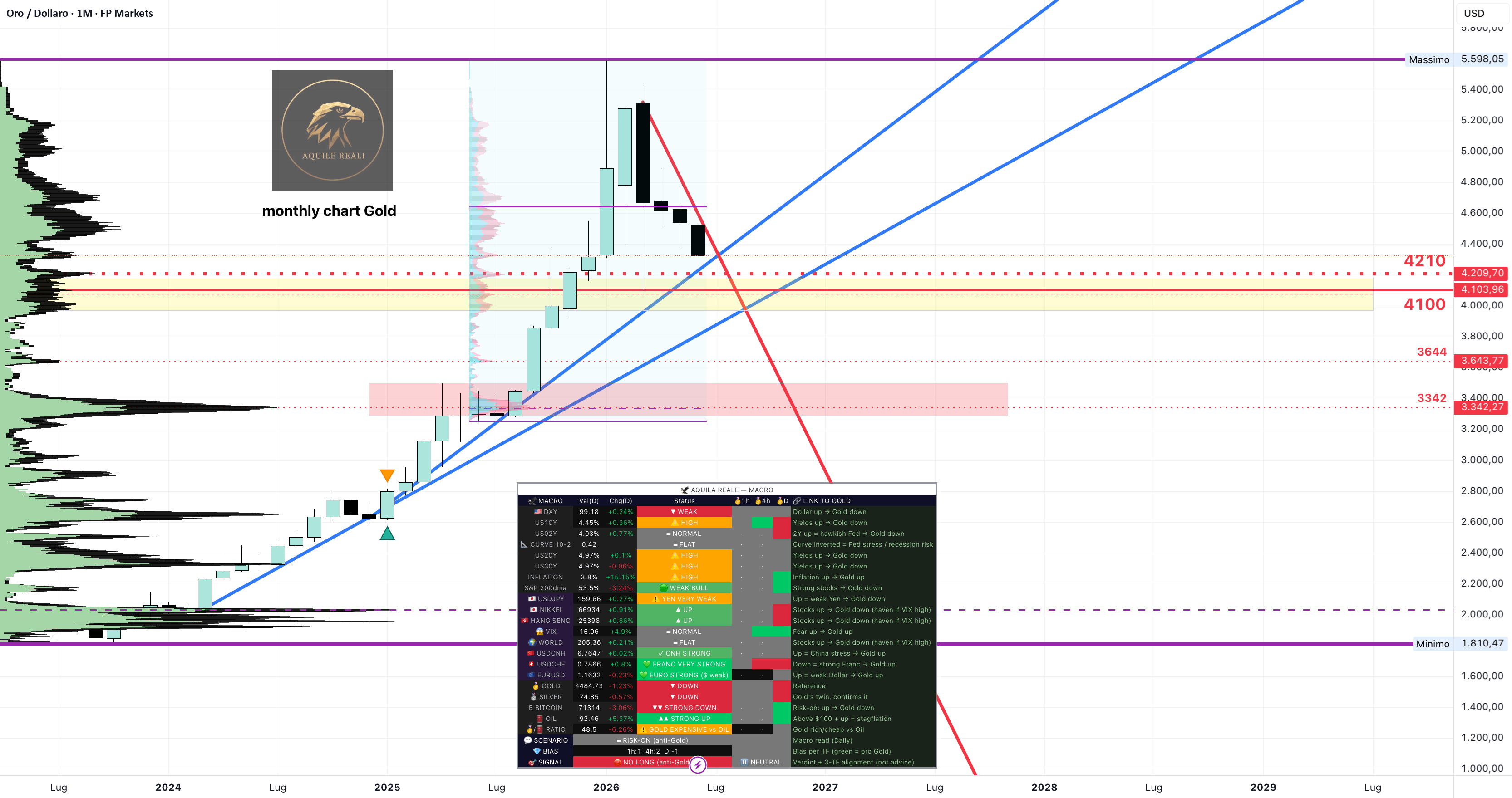
Aggancio a venerdì 5 giugno: l’oro è sceso non per inflazione, ma per il dato sul lavoro USA molto più forte del previsto (172k posti contro 85k attesi). Lavoro forte → la Fed ha meno motivi per tagliare → rendimenti e dollaro su → oro giù. Il WTI quel giorno scendeva: la conferma che il ribasso è arrivato dal canale tassi/dollaro, non dall’energia.

🦅 COSA SERVE DAVVERO PER TRADARE L’ORO — Il cruscotto da tenere sotto controllo
Tradare l’oro senza guardare il contesto macro è come volare senza strumenti. Ecco il cruscotto da controllare sempre, prima di ogni operazione:
Rendimenti USA — Treasury 10 anni → US10Y — il driver numero uno. Rendimenti su = oro sotto pressione, rendimenti giù = oro sostenuto. È l’effetto del sentiment sul rialzo/taglio dei tassi: il mercato si muove sull’aspettativa, prima ancora della decisione Fed.
Dollaro → DXY — gemello dei rendimenti. DXY forte = oro più caro per chi compra in altre valute = freno. Spesso reagiscono alla stessa notizia insieme.
Sentiment Fed — tagli o rialzi? È l’innesco di tutto. Da seguire: dati sul lavoro (NFP), inflazione (CPI/PCE), dichiarazioni dei membri Fed.
WTI / petrolio → USOIL — la spia anticipata dell’inflazione. Petrolio su → inflazione attesa su → tassi su → oro giù. ⚠️ Canale indiretto: venerdì il WTI scendeva, quindi il calo dell’oro NON veniva dall’energia — proprio il petrolio fermo conferma che la causa era tassi/dollaro.
Rischio geopolitico (bene rifugio) — il jolly. In caso di guerra o panico l’oro sale anche con tassi alti.
La gerarchia da ricordare: rendimenti (US10Y) e dollaro (DXY) al centro → sentiment Fed come innesco → inflazione e WTI (USOIL) come catena che ci arriva → rifugio come jolly nei momenti di paura. Quando questi strumenti raccontano storie diverse tra loro (come venerdì: oro giù ma petrolio giù), è lì che capisci da dove arriva davvero il movimento.
🦅 ASPETTATIVE SUI TASSI — Strumenti e date da monitorare (Fed + BCE)
Il prezzo dell’oro si muove sull’aspettativa di tagli o rialzi, non sulla decisione già presa. Ecco dove leggere queste aspettative e quando arrivano gli appuntamenti che le possono ribaltare.
Strumenti per le aspettative Fed (USA):
CME FedWatch Tool → cmegroup.com/markets/interest-rates/cme-fedwatch-tool.html — mostra in % le probabilità di taglio/rialzo che il mercato assegna a ogni riunione. Il termometro principale.
US10Y (rendimento Treasury 10 anni) e DXY (dollaro) — reagiscono in tempo reale al cambio di aspettative.
Dati che muovono le aspettative: lavoro (NFP), inflazione (CPI/PCE), parole dei membri Fed.

Strumenti per le aspettative BCE (Eurozona):
ECB-Watch → ecb-watch.eu/ — l’equivalente del FedWatch per la BCE: probabilità di taglio/rialzo prezzate dal mercato a ogni riunione.
Cambio EUR/USD — sintetizza il differenziale di aspettative Fed vs BCE.
Dati chiave: inflazione HICP eurozona, PMI, dichiarazioni dei membri del Consiglio Direttivo.
📅 Riunioni Fed (FOMC) 2026 — decisione alle 20:00 ora italiana: 27-28 gennaio, 17-18 marzo, 28-29 aprile, 16-17 giugno, 28-29 luglio, 15-16 settembre, 27-28 ottobre, 8-9 dicembre. La prossima è 16-17 giugno.
📅 Riunioni BCE 2026 — decisione alle 14:15 CET: 19 marzo, 30 aprile, 11 giugno, 23 luglio, 10 settembre, 29 ottobre, 17 dicembre. La prossima è 11 giugno.
⚠️ Nelle 24-48h attorno a queste date la volatilità sull’oro esplode: un singolo commento può muovere il prezzo in secondi. Pianifica le posizioni di conseguenza.
🦅 AQUILE REALI — Nate per volare, nate per osare.
🇬🇧 English version

🦅 THE ENGINE BEHIND GOLD — What Really Moves XAUUSD
Real rates (rates minus inflation) are the core of everything. Gold pays no interest: when real rates rise, holding it has a “cost” and the price falls; when they drop, gold rises. But the move starts from expectations, not the decision already made — gold moves ahead of time, on what the market thinks the central bank will do.
The drivers, in order of importance:
Real rates and Fed sentiment — the main engine. What matters is the expectation of cuts or hikes, more than the current rate.
The dollar — the twin of rates. A strong dollar makes gold more expensive for buyers in other currencies, creating downward pressure. They often move together.

Inflation — it feeds into the real-rate calculation. On its own it would support gold, but if the Fed responds by raising rates more than inflation, the rate effect wins.
WTI / oil — it doesn’t move gold directly: it’s an inflation signal. Oil up → inflation up → rates up → gold down. If gold drops but oil is flat, the cause lies elsewhere (rates/dollar).
Safe haven — the wildcard. In war or panic, gold can rise even with high rates: the demand for safety beats the math of yields.
Tie-in to Friday, June 5: gold fell not because of inflation, but because of the much stronger-than-expected US jobs data (172k jobs vs. 85k forecast). Strong jobs → the Fed has fewer reasons to cut → yields and the dollar up → gold down. WTI was falling that day: confirmation that the drop came through the rates/dollar channel, not energy.
🦅 WHAT YOU REALLY NEED TO TRADE GOLD — The dashboard to keep watching
Trading gold without watching the macro context is like flying without instruments. Here’s the dashboard to check every time, before any trade:
US yields — 10-year Treasury → US10Y — the number-one driver. Yields up = gold under pressure, yields down = gold supported. It’s the effect of sentiment on hikes/cuts: the market moves on expectations, even before the Fed decides.
The dollar → DXY — the twin of yields. A strong DXY makes gold more expensive for buyers in other currencies, acting as a brake. They often react to the same news together.
Fed sentiment — cuts or hikes? It’s the trigger for everything. Watch: jobs data (NFP), inflation (CPI/PCE), Fed members’ statements.
WTI / oil → USOIL — the forward signal of inflation. Oil up → expected inflation up → rates up → gold down. ⚠️ Indirect channel: on Friday WTI was falling, so gold’s drop did NOT come from energy — flat oil itself confirms the cause was rates/dollar.
Geopolitical risk (safe haven) — the wildcard. In war or panic, gold rises even with high rates.
The hierarchy to remember: yields (US10Y) and the dollar (DXY) at the center → Fed sentiment as the trigger → inflation and WTI (USOIL) as the chain that leads there → safe haven as the wildcard in moments of fear. When these instruments tell different stories from one another (like Friday: gold down but oil down), that’s exactly when you understand where the move really comes from.
🦅 RATE EXPECTATIONS — Tools and dates to monitor (Fed + ECB)
Gold moves on the expectation of cuts or hikes, not on the decision already made. Here’s where to read those expectations and when the events that can flip them arrive.
Tools for Fed expectations (US):
CME FedWatch Tool → cmegroup.com/markets/interest-rates/cme-fedwatch-tool.html — shows the market-implied probability of cuts/hikes for each meeting. The main thermometer.
US10Y (10-year Treasury yield) and DXY (dollar) — react in real time to shifting expectations.
Data that moves expectations: jobs (NFP), inflation (CPI/PCE), Fed members’ comments.
Tools for ECB expectations (Eurozone):
ECB-Watch → ecb-watch.eu/ — the ECB equivalent of FedWatch: market-priced probability of cuts/hikes at each meeting.
EUR/USD — sums up the Fed-vs-ECB expectations gap.
Key data: Eurozone HICP inflation, PMIs, Governing Council statements.
📅 Fed (FOMC) meetings 2026 — decision at 2:00 PM ET: January 27-28, March 17-18, April 28-29, June 16-17, July 28-29, September 15-16, October 27-28, December 8-9. Next: June 16-17.
📅 ECB meetings 2026 — decision at 14:15 CET: March 19, April 30, June 11, July 23, September 10, October 29, December 17. Next: June 11.
⚠️ In the 24-48h around these dates, gold volatility spikes: a single comment can move the price in seconds. Plan your positions accordingly.
🦅 ROYAL EAGLES — Born to fly, born to dare.

#Adessonews seleziona nella rete articoli di particolare interesse.
Se vuoi leggere l’articolo completo clicca sul seguente link
Source link
